
Jack Hayes
2026-08-13 
Why Unhappy Customers are More Likely to Leave Reviews (And What to Do About It)
Do you serve hundreds of satisfied customers who leave your business smiling, but your Google Business Profile remains quiet? Then, one person has a slightly negative experience, and within an hour, a scathing 1-star review is published for the world to see.
It isn't just your imagination, and it isn't bad luck. Human psychology actively works against businesses when it comes to online reviews.
If you don't have a proactive strategy to generate good reviews from your happy customers, your online reputation will always be held hostage by your most frustrated customers. Here’s a breakdown of the psychology behind online reviews, why negative bias exists, and the exact steps you can take to manage your online reputation effectively.
Quick Answers: How to Fix the "Negative Bias" in Reviews
For a quick overview, here is why unhappy customers are louder, and how to drown them out:
Negativity Bias: Negative experiences trigger adrenaline and a strong desire to "warn" others, making unhappy customers 52% more likely to leave a review.
The Silent Majority: Most satisfied customers lack the emotional trigger to take the time to write a review. Because they got exactly what they expected, they rarely leave organic reviews without being prompted.
The Solution: Make it quick and easy for people to leave reviews. By automating review requests with text messages or emails immediately after a transaction, you can capture more positive feedback.
Damage Control: Always respond to negative reviews professionally to de-escalate the situation and show future searchers that you actively care about customer service.
Why are unhappy customers more likely to leave online reviews?
It all comes down to motivation. Leaving a review requires time and effort. To take those steps organically, a customer needs a powerful reason.
When a customer feels ignored, overcharged, or disappointed, they experience an adrenaline spike that fuels a strong desire to make their voice heard. According to a study on customer lifetime value by Zendesk, customers who have a bad experience are 52% more likely to share it as an online review than those who had a good experience. Negative emotion is the strongest natural driver of online reviews.
Why don’t satisfied customers leave more reviews?
Most of your customers belong to the "Silent Majority." They visit your business, receive the service they expected, pay their bill, and leave satisfied.
Because the transaction went exactly as expected, there’s no major emotional reaction. They’re perfectly happy to do business with you again, but it doesn’t cross their mind to go find your Google listing and type out a 5-star review.
How does organic review bias hurt your business?
If you rely solely on organic, unprompted reviews, your star rating will naturally be skewed more toward the people who are most likely to leave reviews (unhappy customers). This artificially lower review rating hurts your local SEO rankings and drives potential new customers to competitors with better review ratings.
What is the best way to get happy customers to leave reviews?
You have to activate customers to leave reviews by asking them directly and making it easy for them.
You shouldn’t sit back and expect a satisfied customer to go out of their way to find your Google profile. Instead, just make it easy for them and drop a review link directly to their phone or email at the exact moment they’re more likely to give feedback (usually right after their appointment or purchase). When you make leaving a 5-star review a one or two click process, satisfied customers are much more likely to write a review.
How should you respond to negative reviews when they happen?
You can’t just delete a legitimate negative review, but you can control the narrative.
Respond Quickly: Reply within 24-48 hours to show you are attentive.
Stay Objective: Never argue online. Validate their frustration without taking it personally.
Take it Offline: Provide a direct phone number or email address to resolve the issue privately.
Remember, your response isn't just for the angry reviewer; it’s a billboard for the hundreds of potential customers who will read it and judge how you handle conflict.
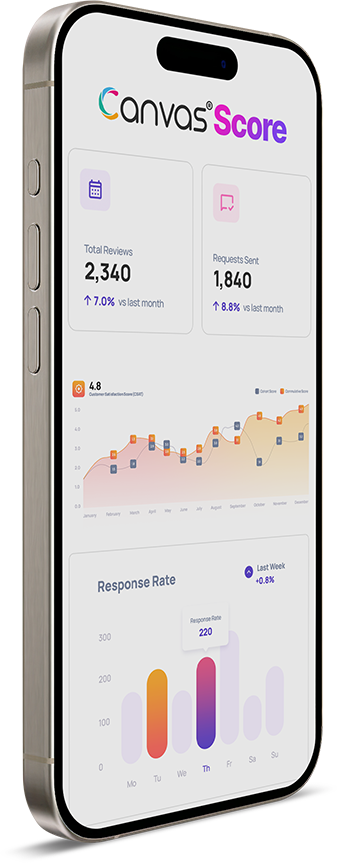
Stop letting the critics control your reputation. Start your 14-day free trial with Canvas® Score today and give your happiest customers the microphone.
Canvas® Score, the latest innovation from Roya.com — trusted by thousand of healthcare practices

Canvas® Score is a proprietary review & referral automation platform designed and developed by Roya.com
© 2026 Canvas® Score | All Rights Reserved