
Jack Hayes
2026-10-01 
What is an NPS survey and why is it important?

You can’t fix something if you don’t know it’s broken. While your Google Business Profile shows you what past customers think of your business, how do you measure underlying customer loyalty before they leave a review?
For over two decades, Fortune 500 companies have used a single metric to predict business growth, identify operational issues, and measure true customer satisfaction. It’s called the Net Promoter Score (NPS), and it’s just as important for a local dental clinic or multi-location franchise as it is for a global tech giant.
Here’s a breakdown of what exactly an NPS survey is, how it’s calculated, and why it’s the leading indicator of your business’s reputational health.
Quick Answer: Understanding Net Promoter Score (NPS)
For a quick overview, here’s why NPS is the gold standard of customer feedback:
One Question: NPS is based on a single question: "On a scale of 0 to 10, how likely are you to recommend us to someone else?"
Three Categories: It segments your customers into Promoters (9-10), Passives (7-8), and Detractors (0-6).
Predicts Revenue Growth: A high NPS is a direct predictor of future organic business growth, repeat purchases, and successful referral campaigns.
Prevents Bad Reviews: Sending an internal NPS survey catches unhappy customers (Detractors) so you can fix their issue before they vent on Google.
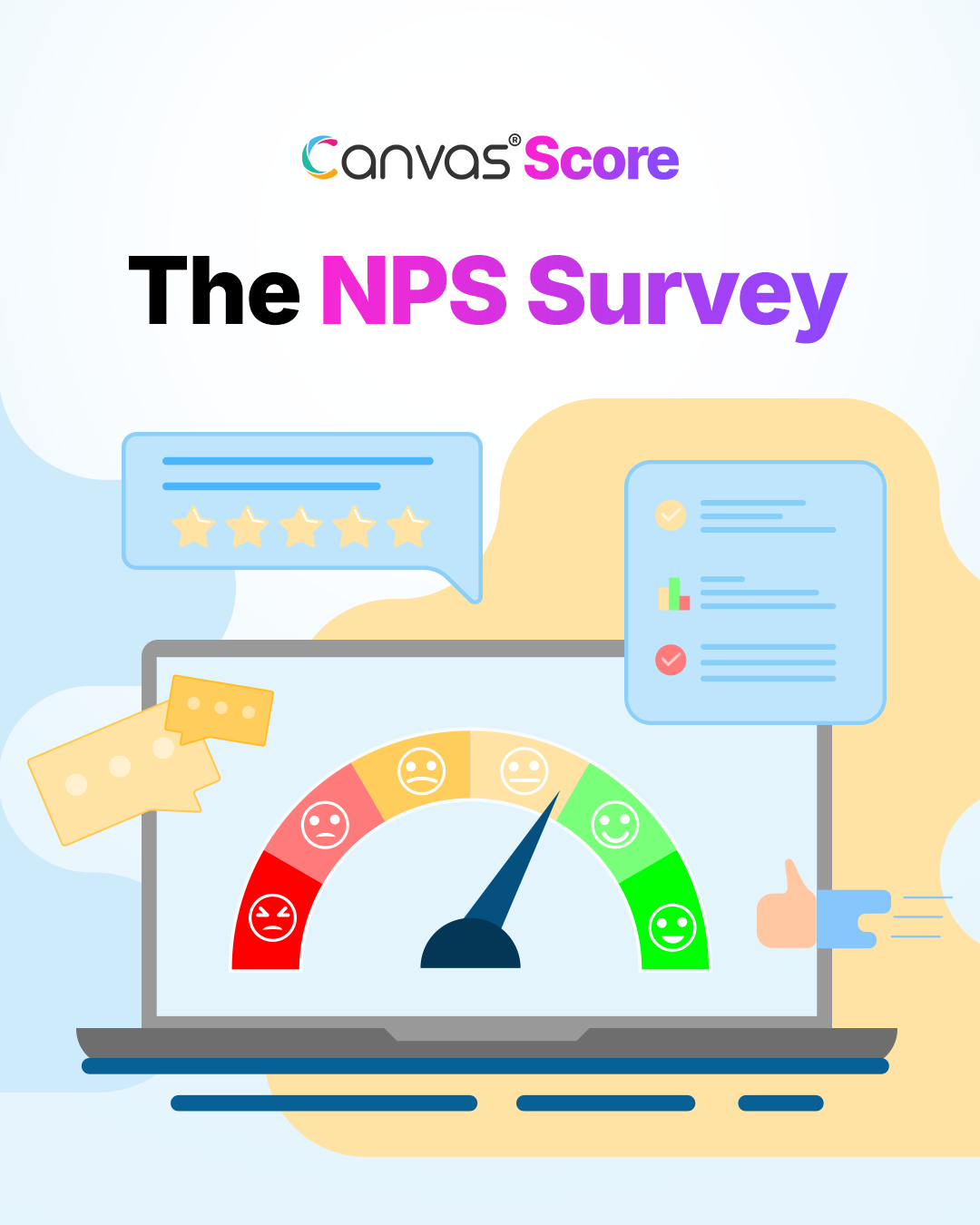
What exactly is a Net Promoter Score (NPS)?
Net Promoter Score is a customer loyalty and satisfaction measurement. Instead of asking a customer to fill out a long, tedious 20-question survey about wait times and cleanliness, an NPS survey asks just one simple question: "How likely are you to recommend our business to a friend or colleague?"
Because it’s short and direct, the response rate is incredibly high. The customer selects a number from 0 to 10, and their answer reveals their true emotional connection to your brand.
How are customers categorized in an NPS survey?
Based on the number they select, your customers are sorted into three distinct behavioral categories:
Promoters (Scores 9-10): These are your Thrilled Advocates. They are loyal enthusiasts who are most likely to keep buying from you, refer their friends, and eagerly leave 5-star Google reviews.
Passives (Scores 7-8): These are the Silent Majority. They are satisfied but unenthusiastic. They got what they paid for, but they are vulnerable to competitive offers and rarely write reviews organically.
Detractors (Scores 0-6): These are your Frustrated Critics. They are unhappy customers who are at high risk of churning, spreading negative word-of-mouth, and leaving damaging 1-star reviews.
How do you calculate your final NPS score?
Your final score is calculated using a very simple formula: Percentage of Promoters minus Percentage of Detractors. (Passives are ignored in the final math because their neutral stance doesn't actively help or harm your growth).
For example, if you survey 100 people and get 60 Promoters, 30 Passives, and 10 Detractors, your formula is 60% - 10%. Your Net Promoter Score is 50. NPS is always displayed as a whole number ranging from -100 to +100.
What is considered a "good" NPS score?
While benchmarks vary slightly by industry, the general rule of thumb is:
Above 0 is Baseline: It means you have more Promoters than Detractors.
Above 50 is Excellent: Your business is generating highly positive word-of-mouth.
Above 80 is World-Class: Your brand has Apple-level customer loyalty.
If your score falls below zero, it’s a massive red flag for the future of your business. It means you are actively generating more unhappy critics than loyal advocates, and your business is likely losing revenue to churn.
How does NPS tie directly into Google reviews and referrals?
NPS allows you to play offense with your marketing and defense with your reputation.
When you know exactly who your Promoters are, you know exactly who to target for your automated "Give-and-Get" referral campaigns. They are already primed to advocate for you. On the flip side, identifying your Detractors allows you to target immediate service recovery. By reaching out to a Detractor to fix their problem privately, you prevent them from taking their frustration public on Yelp or Google.
The Canvas® Score Solution: Track Customer Loyalty Automatically
You don’t have to guess how your customers feel. To maximize your local SEO and referral revenue, you need to understand your NPS data in real-time.
Here’s how Canvas® Score turns customer feedback into actionable business intelligence:
Automated NPS Surveys: Trigger text or email surveys immediately after a customer visit to capture their sentiment while it’s fresh in their minds.
Smart Lead Routing: Automatically send your Promoters directly to Google to leave a 5-star review, while routing Detractors to an internal private feedback form for damage control.
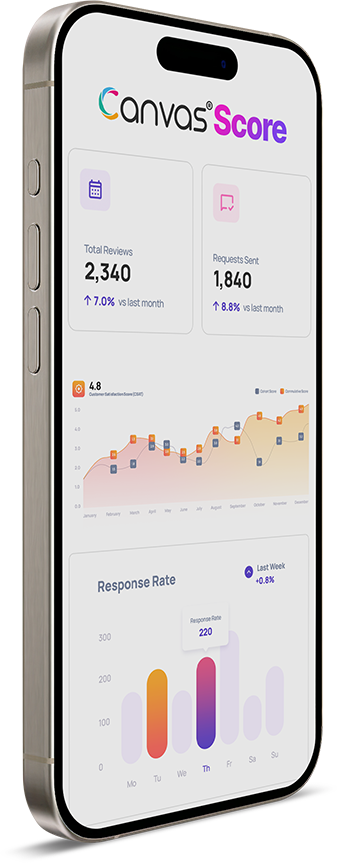
Reputation Intelligence Dashboard: Monitor your live Net Promoter Score, track changes over time, and compare performance across multiple business locations.
Referral Engine Integration: Seamlessly transition your 9-and-10-score Promoters directly into automated referral campaigns to drive immediate revenue.
Stop guessing and start measuring. Start your 14-day free trial with Canvas® Score today and unlock the data you need to grow your reputation.
Canvas® Score, the latest innovation from Roya.com — trusted by thousand of healthcare practices

Canvas® Score is a proprietary review & referral automation platform designed and developed by Roya.com
© 2026 Canvas® Score | All Rights Reserved